
Foundations for a flourishing Australia

Australia oration
25 June 2026
Chair Danielle Wood delivered the 2026 Australia oration in Sydney.
Download the oration
 Foundations for a flourishing Australia (PDF 801.8 KB)
Read the oration
Thank you, Holly, for that kind introduction. It’s an honour to be here tonight.
I join in paying my respects to elders past and present of Gadigal country, which is looking spectacularly beautiful tonight.
I’ve presented many speeches and orations over the years – so many that my daughter tells people my job is ‘lecturing at people’ – but this is high up there in terms of memorable venues (and memorable audience of course!).
To take you behind the curtain for a minute, there’s a bit of a formula to the keynote.
Orations like this are often named for an illustrious figure, most commonly a man notable in government, academia or industry. For a speech like this, I would typically frame my remarks around his notable strengths and achievements.
But this being the Australia Oration, I was initially flummoxed on how to proceed. But I’ve decided to stick to the script. I want to talk tonight to this nation’s strengths, achievements and opportunities.
We talk a lot about the challenges we face as a society and economy. As a practitioner of the so called ‘dismal science’, I get it. It’s practically in my job description.
But tonight I want to focus on the positive. While we undoubtedly face economic challenges, we do so from a position of some strength. And if we get the foundations right, there are many opportunities we can seize in coming years.
---
Let me start with Australia’s economic biography.
We are a prosperous country with high living standards. And those living standards have improved over time.
The average Australian today earns nearly 3 times as much as the average Australian in 1960. 1
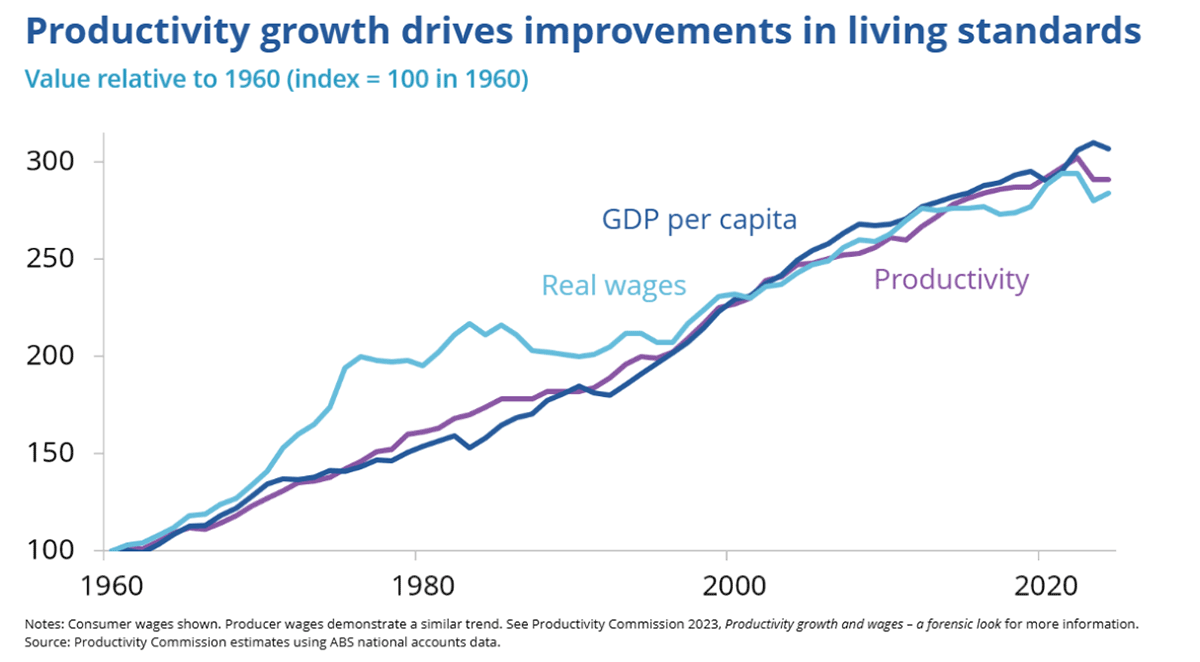
And we’re not working ourselves to the bone to do it. Working hours have declined, with the average worker working 5 hours fewer than in the year the Beatles were formed. 2
We enjoy better quality goods and services in everything from healthcare to entertainment.
It’s easy to lose sight of how much our lives have changed for the better – but my 10-year-old always provides a reality check. Every time I tell her about growing up in the 1980s, she declares – ‘mum, the olden days sound terrible’.
We escaped those ‘dark days’ of the 80s through strong productivity growth and increasing workforce participation, particularly among women. That dynamic duo has underpinned steady growth in living standards. For most of the last 75 years, each generation of Australians has been better off than the one before. 3
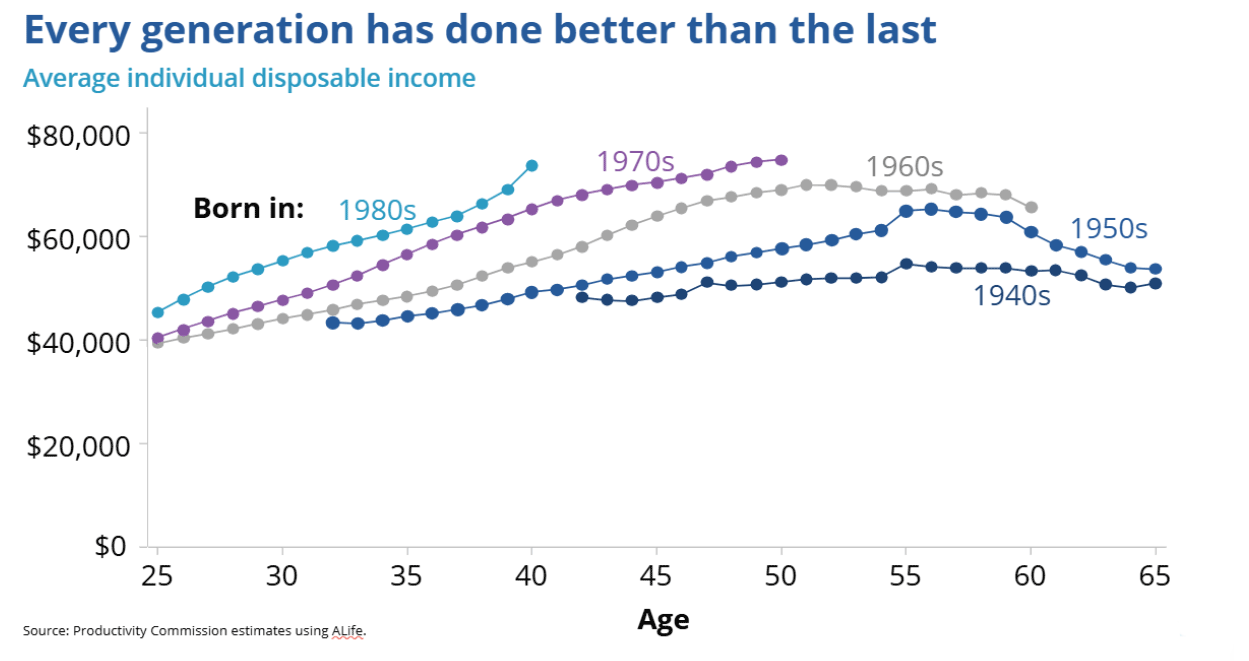
Two thirds of Xennials, those born at the cusp of the Gen X and millennial generations, earn more than their parents did when they were in their 40s. 4
Even better, those gains have been relatively evenly spread. Other than some COVID blips, income inequality has been steady since the 1990s. 5
And we have been one of the most economically mobile countries in the world. For Xennials in Australia, where their parents sat in the income distribution has had less bearing on where they’ve ended up than in almost any other country.
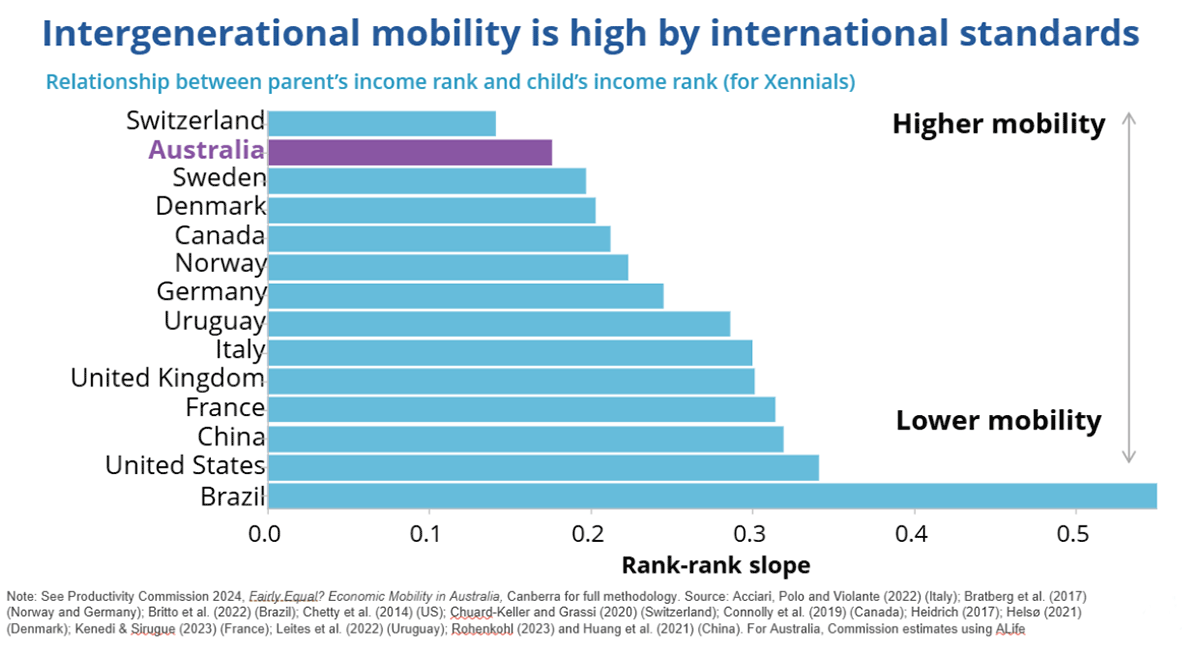
It’s refreshing to beat out the Scandinavians for once... 6
So that’s the good news, but I do have to put my dismal glasses on for a minute.
Generation-on-generation progress is stalling.
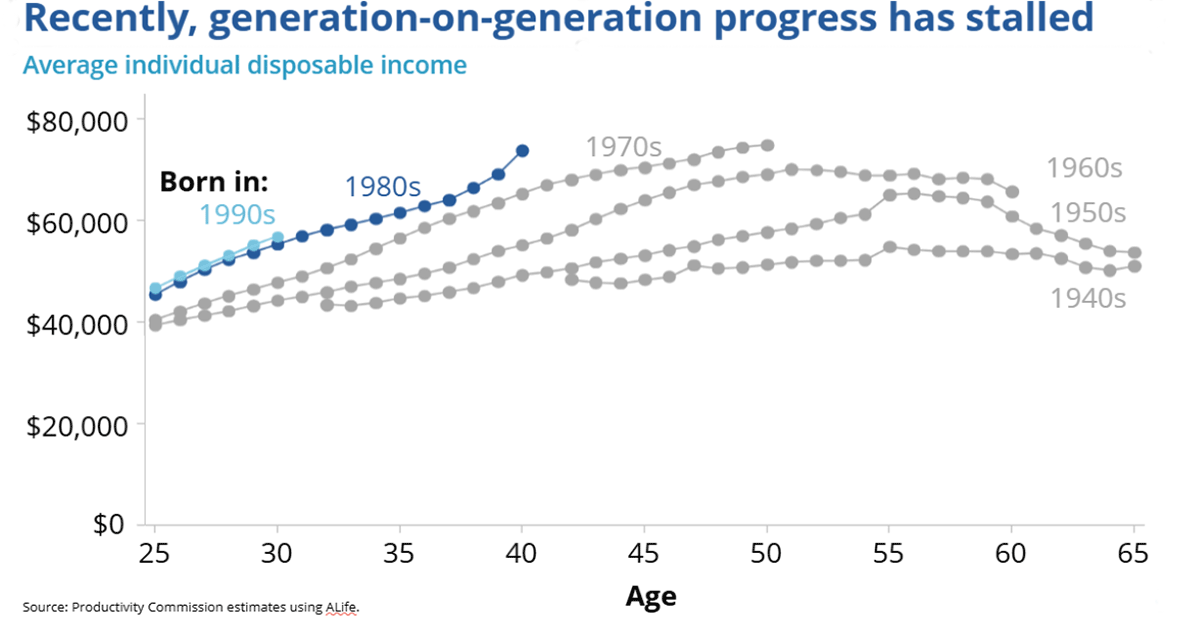
Late millennials, born in the 1990s, were the first generation not to see the same progress in their living standards. 7
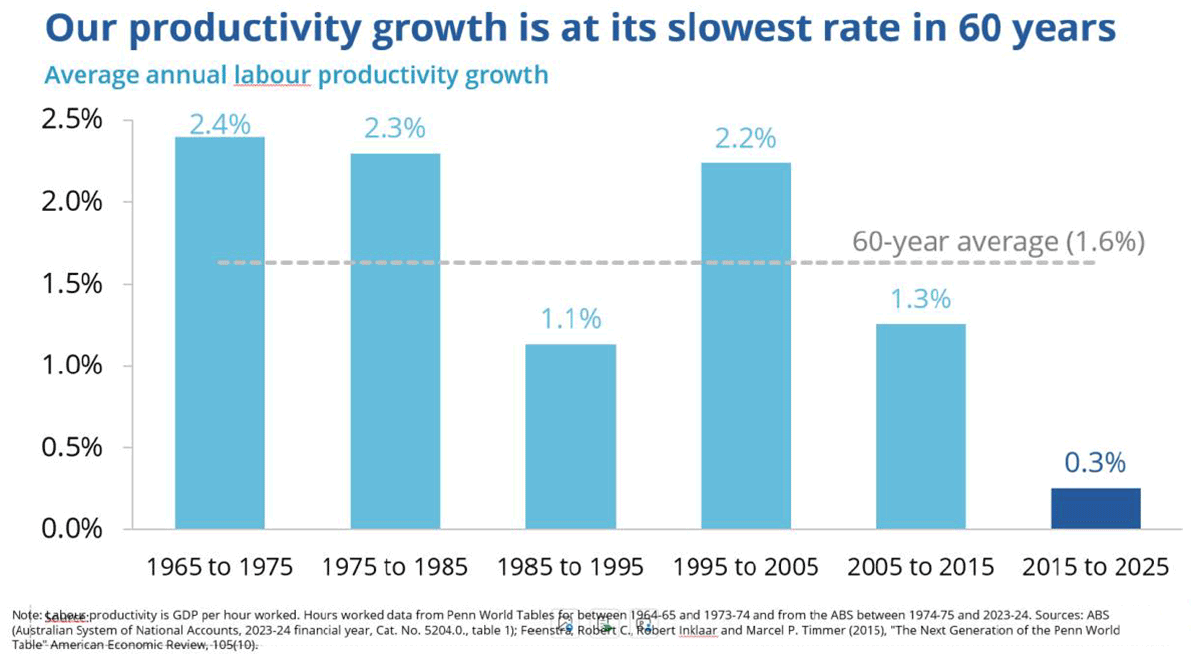
One big culprit is our slow productivity growth, which has been running at just 0.3 per cent for the past decade – less than a quarter of its 60-year average. 8
That same generation is contending with high house prices that make it hard to get a foothold in the market, pushing them out of our biggest and most productive cities.
The other bad news is that more headwinds are coming our way.
Changes in the global environment are making economic management more difficult. The era of free trade that fuelled Australia’s prosperity is looking wobbly. And governments are spending more time and money on resilience and defence as the geo-political sands shift beneath them. The decades of the ‘peace dividend’ seem to be over.
In a more uncertain world, being ‘match fit’ at home is the best way to cushion the impacts of global economic shocks and capture the opportunities that come our way.
These opportunities don’t lie in any particular sector, but in making sure we have the foundations in place to take advantage of our strengths.
--
First, new technologies create opportunities for growth and AI is no exception. While the risks and uncertainties are real, I’m optimistic that it could unleash a new era of productivity growth and abundance.
AI is a general-purpose technology – something that can be put to a wide range of uses, from medical research to graphic design – with the potential to transform our economy.
Previous general-purpose technologies – from the steam engine, to electricity, to personal computers and the internet – reconfigured economies and supercharged growth. The steam engine alone was responsible for about a third of the UK’s productivity growth in the 40 years to 1910. The ICT revolution in America contributed about half of its productivity growth in the 30 years to 2005. 9
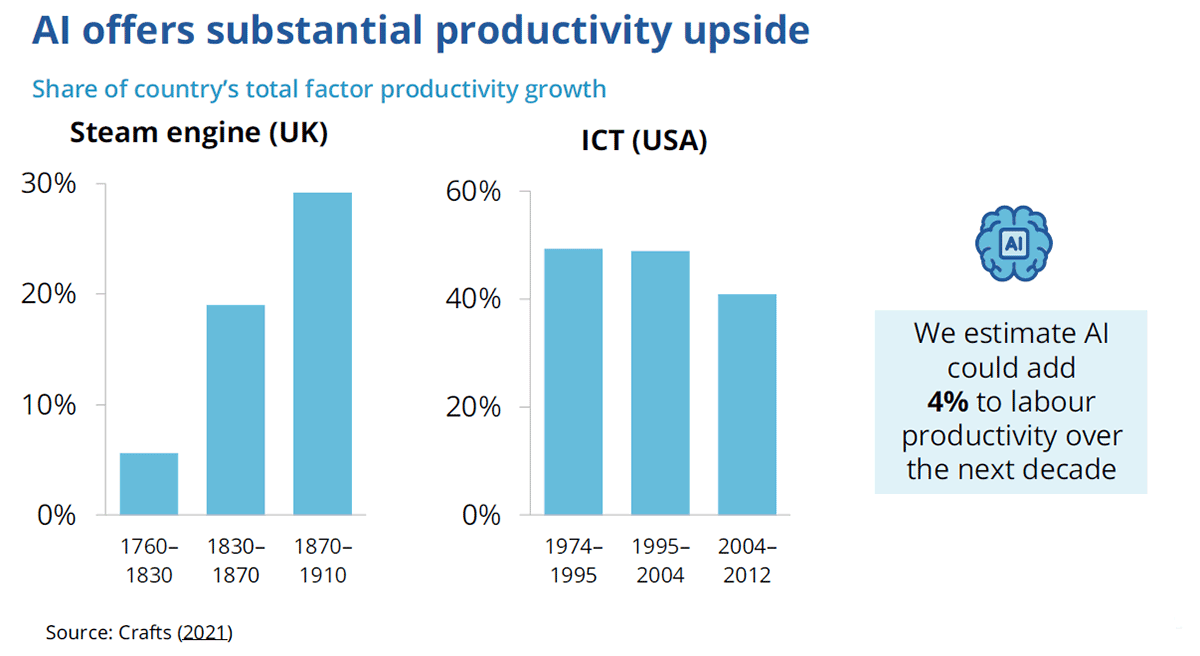
AI has the potential to be just as transformative. We’ve estimated that it could add about 0.4 per cent a year to labour productivity over the next decade 10 – which would be a substantial step up for a country averaging 0.3% over the past one.
That’s a pretty conservative estimate based on AI improving the way we deliver the goods and services we make today. If AI can increase the pace of innovation itself – making it easier to discover and adopt new ideas – the upside could be bigger still.
Government has an important role to play in setting the parameters for data centre investment, managing the regulatory environment, and leading by example with its own use of AI.
But to realise the benefits as a nation, we’ll also need businesses willing to take a swing. That’s more than just business-as-usual with some AI-generated meeting minutes – it’s about using AI to transform products and services.
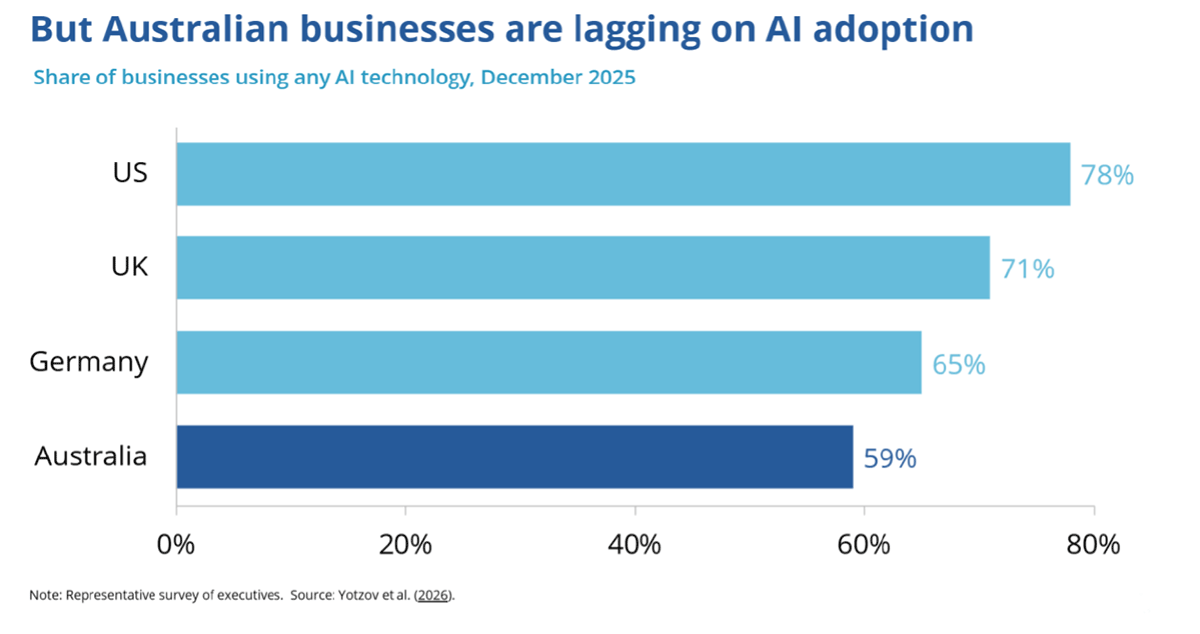
Yet at the moment, Australia is a little behind our peers in the UK, US, and Germany even on that initial adoption and experimentation. 11
This slow adoption is consistent with the broader experience of the last twenty years. Investment as a share of GDP is down more than 3% 12 and we have gradually slipped further behind the technology frontier. 13
But it doesn’t have to be this way. If business can rediscover its animal spirits, we can climb the ranks in AI innovation and adoption and lift our productivity and future incomes.
---
To realise this, we need not just business investment, but the right skills and talent – the human capital – to make it happen.
Children born today will likely be working through to the 2080s. Their adaptability, their resilience and their capacity to learn will define our future productivity.
Again, we come from a position of strength. Australians are among the world’s most educated, and we’re fortunate to attract highly skilled migrants many of whom make a big economic and social contribution over their lives. We have world-class teaching and research institutions that provide our third-largest export, international education.
The policy challenge is making sure everyone has access to the opportunities that high-quality education unlocks.
We can do more to ensure our school system is performing at its best. Despite significant investment over the past 20 years, Australia’s scores in science, reading and maths have fallen in international tests. 14
Test scores are consistently worse for students from less advantaged backgrounds – and we’ve made no progress in closing those gaps over time. 15 Schools should be the highway to opportunity for all students – but at the moment some are stuck in the slow lane.
We can do more to support teachers and schools to provide high-quality, evidence-based education for all students. That means freeing up time for teachers to teach by providing high-quality, free curriculum materials and education technology. It has been great to see the Federal Government agree to explore this in the most recent budget.
What about those of us who have aged out of the school demographic?
Interest in Harry Potter may fade, but the imperative for learning does not.
Historically, this hasn’t always been something we’ve done well. Our education system has operated as a one-way conveyer belt – school, maybe university or vocational education, then a job.
We need to get better at lifelong learning – meaning that people may retrain or change careers multiple times throughout their lives.
Governments can support this by improving the way educational authorities recognise prior learning and experience, so people don’t need to go back to square one if they change degrees or careers.
And the Federal Government should better recognise and fund training at work, particularly for small and medium businesses, an important and underdone channel for lifelong skill development. 16
Getting the foundations right on building skills will set Australians up to flourish no matter what the future brings.
---
Another key building block for our ongoing success is our cities – the engine rooms of our economic growth.
A city is more than the sum of its parts. As the events industry knows well – there are spillover benefits when people and businesses come together. The sharing of ideas, knowledge and contacts is ultimately what drives innovation.
Australia’s cities are one of our trump cards in the global competition for talent. I say this grudgingly as a Melburnian but few cities can match Sydney’s combination of good weather and natural and man-made beauty. It’s a powerful drawcard.
But these benefits only occur when our cities work well – when they can grow and change as our population does. Unaffordable housing drives out younger workers. They lose access to productive well-paid jobs and we lose the dynamism they bring.
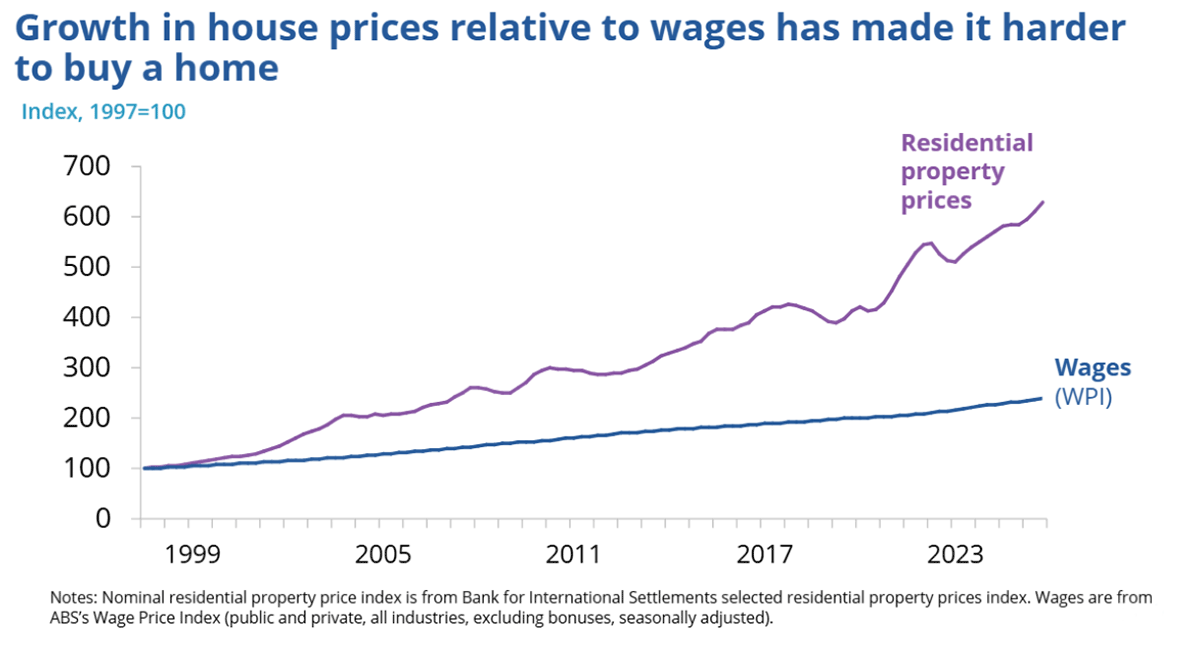
The NSW Productivity Commissioner Peter Achterstraat warned that Sydney was at risk of becoming a city without grandchildren. 17 That’s another way of saying it’s at risk of becoming a city without future artists, tech workers, teachers and researchers.
What’s the solution? In a word, houses. Or in three: supply, supply, supply.
The NSW Government’s recent changes to the planning system to make it easier to add new homes close to jobs and amenities are a critical step. 18 And the Australian Government has put money on the table for critical infrastructure to support housing in return for more supply-enabling reforms. It is a positive that both state and federal governments are taking this challenge seriously.
It won’t be a quick fix. This problem has been decades in the making, and there is a limit to how quickly new supply will be added.
But the payoff is our cities continuing to be the dynamic, innovative, and talent-attracting engine rooms we need them to be.
---
Just to round out, there’s a lot of fear and gloom around us at the moment. Global shocks and uncertainties are having an impact on our psyches as well as our wallets.
But the best form of resilience is a strong and dynamic economy.
The good news is Australia has strong foundations – good institutions, a healthy democracy and an economy that has delivered many decades of opportunity and growing prosperity for Australians.
Business, government and civil society must continue to build on these foundations, by embracing new technologies, adapting our education system for a world of lifelong learning and ensuring that our cities can continue to be magnets for talent and innovation.
We still have many pages to write in the biography of Australia, and I am hopeful that the next chapter can be another great one.
Footnotes
- Productivity Commission 2025, Productivity Commission 2025, Growth mindset: how to boost Australia’s productivity, 5 productivity inquiries, Canberra. Return to text
- Ibid. Return to text
- Productivity Commission 2024, Fairly equal? Economic mobility in Australia, Research paper, Canberra. Return to text
- Productivity Commission 2024, Fairly equal? Economic mobility in Australia, Research paper, Canberra. Return to text
- Productivity Commission 2024, A snapshot of inequality in Australia, Research paper, Canberra. Return to text
- Ibid. Return to text
- Ibid. Return to text
- Update of analysis in Productivity Commission 2025, Productivity Commission 2025, Growth mindset: how to boost Australia’s productivity, 5 productivity inquiries, Canberra. Return to text
- Crafts, N 2021, ‘Artificial intelligence as a general-purpose technology: an historical perspective’, Oxford Review of Economic Policy, vol. 37, no. 3, pp. 521-536. Return to text
- Productivity Commission 2025, Harnessing data and digital technology, Inquiry report no. 111, Canberra. Return to text
- Yotzov, I et al. 2026, ‘Firm data on AI’, NBER Working Paper No. 34836. Return to text
- Productivity Commission 2025, Creating a more dynamic and resilient economy, Inquiry report no. 109, Canberra. Return to text
- Productivity Commission 2025, Annual productivity bulletin 2025, Canberra. Return to text
- Productivity Commission 2025, Building a skilled and adaptable workforce, Inquiry report no. 110, Canberra. Return to text
- Ibid. Return to text
- Productivity Commission 2025, Building a skilled and adaptable workforce, Inquiry report no. 110, Canberra. Return to text
- Scully P and Jackson R 2024, Sydney is at risk of becoming a city with no grandchildren – Productivity Commission report finds, Media release, 13 February. Return to text
- Minns C and Scully P 2025, Low and Mid-Rise policy to unlock 112,000 homes in five years, Media release, 21 February. Return to text