Closing the Gap Review 2026
Pathways of Accountability and Change
By Lani Balzan
About the artwork
The artwork titled ‘Pathways of Accountability and Change’ was created for the Productivity Commission’s visual identity for the second review of progress under the National Agreement on Closing the Gap.
The artwork was created by Aboriginal artist Lani Balzan and represents the shared journey toward meaningful change through the Review of the National Agreement on Closing the Gap 2026.
“Pathways of Accountability and Change” story
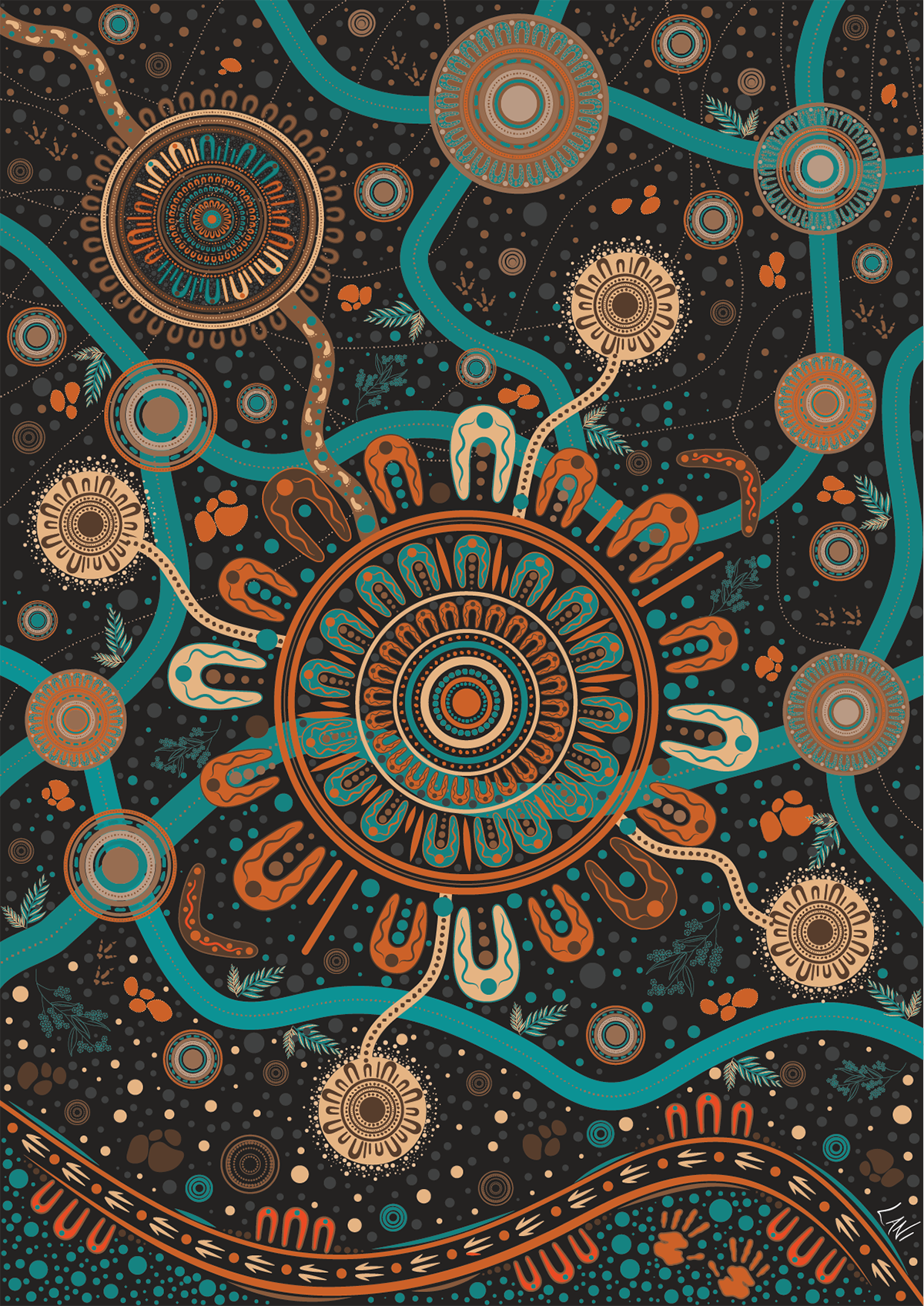
This artwork represents the shared journey toward meaningful change through the Review of the National Agreement on Closing the Gap 2026. At the centre of the artwork is a large gathering symbol, representing Aboriginal and Torres Strait Islander peoples, communities, organisations and leaders who continue to guide the path forward through lived experience, cultural knowledge and self-determination.
Surrounding the central gathering are flowing pathways that travel across the artwork, symbolising the interconnected systems, partnerships and relationships required to create lasting change. These pathways reflect the four Priority Reforms of the National Agreement — formal partnerships and shared decision-making, strengthening the community-controlled sector, transforming government organisations, and improving shared access to data and information.
The repeated meeting places throughout the artwork represent communities, organisations, governments and stakeholders coming together with a shared responsibility to listen, learn and act.
Although each meeting place is unique, they are all connected, reflecting that progress cannot happen in isolation. The flowing lines between them represent communication, accountability and the ongoing exchange of knowledge, experiences and truths.
The footprint symbols throughout the artwork symbolise the journeys taken by Aboriginal and Torres Strait Islander peoples across generations — journeys of resilience, advocacy, survival and leadership. They also represent the ongoing movement toward equity, where each step contributes to a larger collective future.
Native plant elements woven through the artwork symbolise growth, healing and renewal. They acknowledge the strength of culture and community-led solutions, grounded in Country, connection and care. The detailed dot work scattered across the background reflects the many voices, stories and experiences that contribute to the national conversation around Closing the Gap.
The dark background represents the challenges and complexities that still exist, while the vibrant turquoise and orange pathways symbolise hope, strength, progress and the energy created when people work together with genuine partnership and shared purpose.
Overall, this artwork tells a story of collective responsibility, cultural strength and the importance of walking together to create systems that support Aboriginal and Torres Strait Islander peoples, communities and futures.

About the artist
Lani Balzan is an Aboriginal artist and graphic designer specialising in designing Indigenous canvas art, graphic design, logo design, Reconciliation Action Plan design and document design.
Lani is a proud Aboriginal woman from the Wiradjuri people of the three-river tribe. Her family originates from Mudgee but she grew up all over Australia and lived in many different towns starting her business in the Illawarra NSW and recently relocating to Mid-North Queensland.
In 2016 Lani was announced as the 2016 NAIDOC Poster Competition winner with her artwork ‘Songlines’. This poster was used as the 2016 NAIDOC theme across the country.
Lani has been creating Aboriginal art since 2013 and has continued success across the country. One of her biggest goals and inspirations with creating Aboriginal art is to develop a better connection to her culture and to continue to work towards reconciliation; bringing people and communities together to learn about the amazing culture we have here in Australia.